
Designing and Specifying: ASTM A53 vs. ASTM A500
When specifying round steel members for structural applications, the choice between ASTM A53 vs A500 pipe comes up more often than it should. The distinction matters—not just for code compliance, but for structural efficiency, cost, and constructability. This article outlines the key differences and explains why ASTM A500 round HSS remains the more appropriate choice for structural design.
What Is ASTM A53?
ASTM A53 is a standard specification covering black and hot‑dip zinc coated (galvanized), welded, and seamless steel pipe. It spans NPS 1/8 to NPS 26 and is intended primarily for mechanical and pressure applications—think steam lines, water distribution, gas conveyance, and similar uses.
Pipe sizes are designated using Nominal Pipe Size (NPS) with a scheduled wall thickness. For example: 4‑inch Schedule 40 pipe. That designation system reflects the specification’s roots in piping systems, not structural frames.
ASTM A53 Grade B has a specified minimum yield strength of 35 ksi.
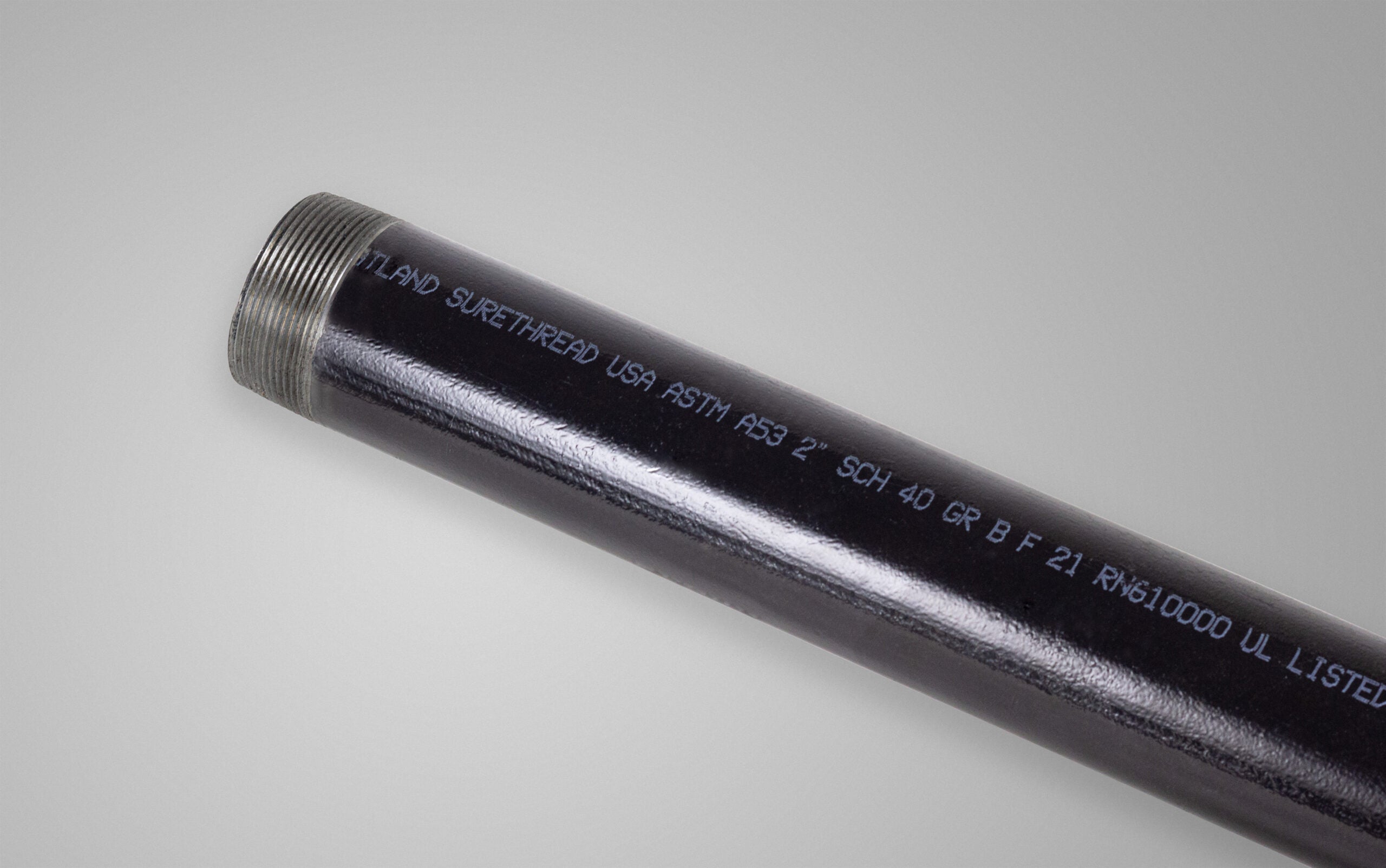
Wheatland Tube’s SureThread™ CW pipe is manufactured to ASTM A53 requirements.
What Is ASTM A500?
ASTM A500 is the standard specification for cold‑formed welded and seamless carbon steel structural tubing, including round, square, and rectangular shapes. It is the most widely used HSS (hollow structural section) specification in North America and is explicitly a structural specification.
Round HSS are designated by outside diameter and nominal wall thickness in decimal inches—for example, 5.563 × 0.250. This system aligns with how structural members are selected and scheduled in design documentation.
ASTM A500 Grade C, the most commonly available grade, carries a specified minimum yield strength of 46 ksi.

ASTM A500 HSS is specifically engineered for the yield demands of structural applications.
Why A500 Round HSS for Structural Applications?
1. Strength‑to‑Weight Ratio
The yield strength difference between ASTM A500 Grade C (46 ksi) and ASTM A53 Grade B (35 ksi) represents a 31% increase in specified yield strength. For column and member design, that translates directly into smaller, lighter sections carrying the same load demand. Less steel by weight typically leads to lower material cost and easier handling in the field.
2. Purpose‑Built Structural Specification
ASTM A500 was developed specifically for structural steel applications. Designing with a pipe specification like ASTM A53 in a structural role introduces a specification mismatch that can complicate EOR review, fabricator procurement, code compliance documentation, and safety.
Structural engineers referencing AISC or Steel Tube Institute (STI) design aids will find that A500 aligns cleanly with published load tables, design examples, and connection data.
3. Tighter Tolerances
ASTM A500 maintains tighter dimensional tolerances than ASTM A53. For connection design and fabrication, reduced variability in wall thickness and outside diameter matters—particularly when fit‑up consistency affects weld quality or end‑plate connections.
4. Broader Size Range
The AISC Steel Construction Manual lists significantly more round HSS sizes under ASTM A500 than ASTM A53 pipe sections. That range gives structural engineers more flexibility to optimize member selection, minimize weight, and achieve target demand‑to‑capacity ratios without overdesigning. Additionally, most structural applications use square and rectangular shapes, which are not available in the ASTM A53 specification.
5. Surface Finish and Fabrication Compatibility
ASTM A53 pipe commonly ships with either a lacquer or hot-dip galvanized coating applied during manufacturing. For structural applications requiring welding and painting, that coating must be removed before fabrication—adding labor time and cost. ASTM A500 round HSS does not ship with a lacquer or coating, streamlining shop fabrication.
6. Avoiding Unnecessary Testing Costs
ASTM A53 includes hydrostatic pressure testing requirements tied to its intended use in pressure systems. For structural applications, that testing provides no structural benefit and represents an unnecessary cost embedded in the material price. ASTM A500 does not carry this requirement.
Typical Applications for ASTM A500 Round HSS
- Building columns and bracing
- Structural supports and frames
- Highway signage and overhead structures
- Communication towers
- Oil field and industrial support structures
- Architecturally exposed structural members
Practical Guidance for Specification
When writing specifications and construction documents, be explicit. Calling out “Round HSS per ASTM A500 Grade C” (or Grade B where appropriate) removes ambiguity for fabricators and steel service centers. Leaving a specification that simply reads “pipe” may result in procurement of ASTM A53 material that, while round, is not optimized for structural applications.
Work with your steel producer or service center to confirm available sizes and wall thicknesses early in the design phase, particularly for less common dimensions. Atlas Tube’s 100% domestic HSS range, including Jumbo™ HSS sizes up to 22‑inch square with walls up to 1-inch thick, supports a wide range of structural applications and can be confirmed through current availability documentation.
ASTM A53 vs ASTM A500: Structural Comparison Summary
| Category | ASTM A53 | ASTM A500 |
|---|---|---|
| Specification Type | Pipe (pressure / mechanical) | Structural steel tubing (HSS) |
| Minimum Yield Strength | 35 ksi (Grade B) | 46 ksi |
| Size Designation | NPS + Schedule | OD × Wall Thickness |
| Available Shapes | Round only | Round, Square, Rectangular |
| Dimensional Tolerances | Standard | Tighter |
| Structural Use Fit | Not purpose‑built | Purpose‑built |
| Surface Coating | Coating common | No coating |
| Pressure Testing | Required | Not required for structural use |
For structural applications requiring a round hollow structural section, ASTM A500 Grade C round HSS is generally the right specification. The yield strength advantage, alignment with structural design standards, broader size range, and fabrication‑friendly surface finish make for a more efficient and cost-effective specification decision.
For questions about specifying round HSS, contact Atlas Tube’s in-house structural engineering team or the Steel Tube Institute’s technical resource library.
Brad Fletcher, Senior Structural Engineer at Atlas Tube, holds the S.E. license—structural engineering’s most advanced credential. With 30+ years of practice, he has served as an HSS industry liaison since 2011.