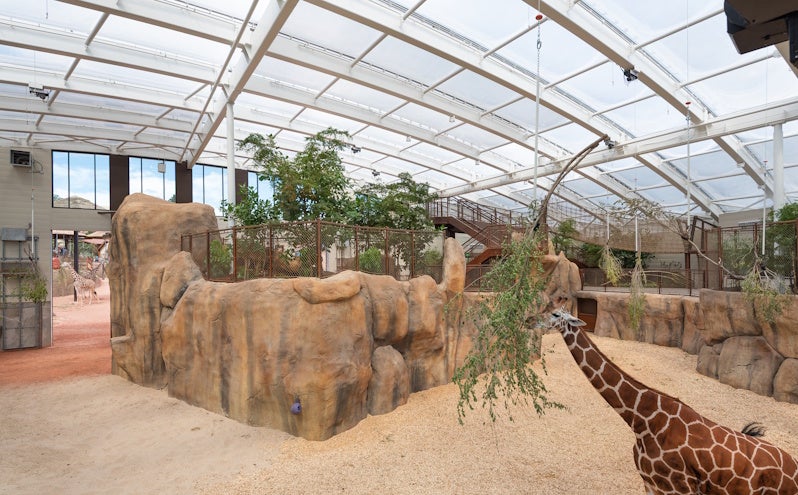
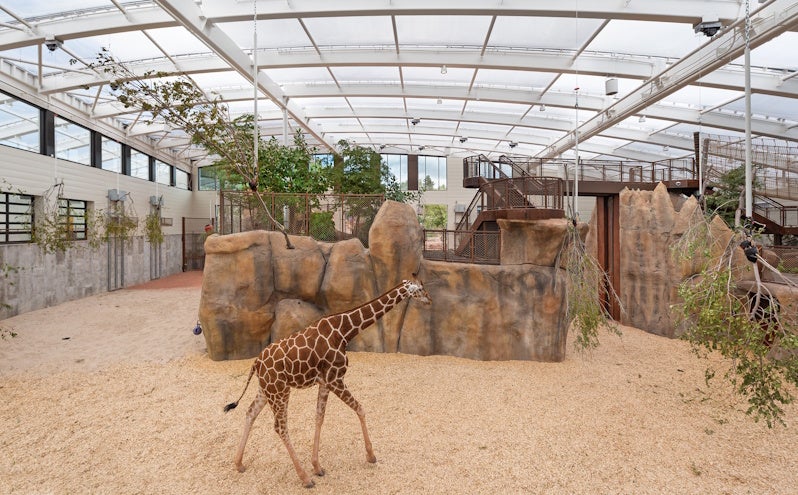
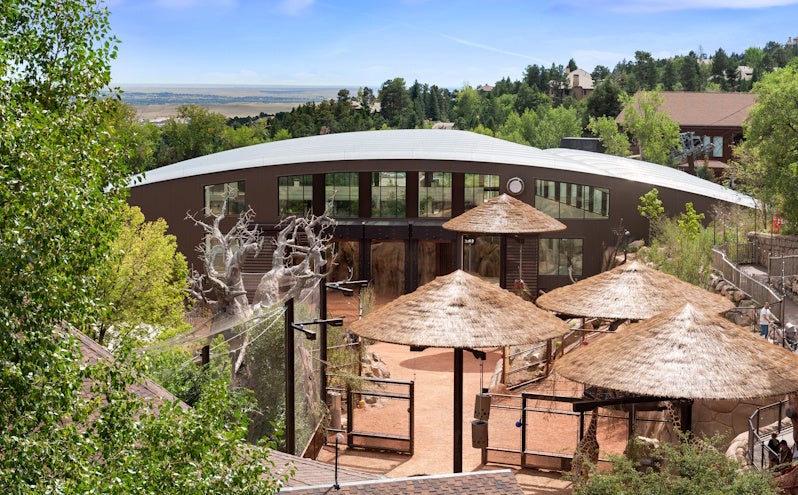
The Cheyenne Mountain Zoo sits dramatically on a mountainside in Colorado Springs. Its famed giraffe herd needed a truly exceptional new habitat. A standard pre-engineered metal building wouldn’t do. The team envisioned a structure on par with Europe’s signature zoo architecture, one that elevated both animal welfare and the visitor experience. This case study details how partners including CSNA Architects, Studio NYL, Drake-Williams Steel and Atlas Tube leveraged Hollow Structural Sections (HSS) to realize this one-of-a-kind vision and overcome design, site and animal care challenges.
A Complex Vision on a Challenging Site
From conception, the goal was to create a barn that embodied architectural excellence, prioritizing aesthetics while also directly serving the unique needs of the giraffes and their keepers. Among the project’s challenges were:
- Complex Design: The zoo sought an iconic, transparent structure filled with natural light—necessitating a bold, unobtrusive framework.
- Budget Constraints: Early iterations with curved steel tubes proved too costly, almost undermining the project.
- Site Limitations: The steep mountain setting and tight footprint imposed logistical and scheduling restraints, complicated further by weather.
- Animal Safety and Cleanliness: There was a strong directive to avoid surfaces that collect dust and to ensure smooth finishes, reflecting a top priority on animal safety and facility hygiene.
The Solution: HSS as the Structural and Architectural Keystone
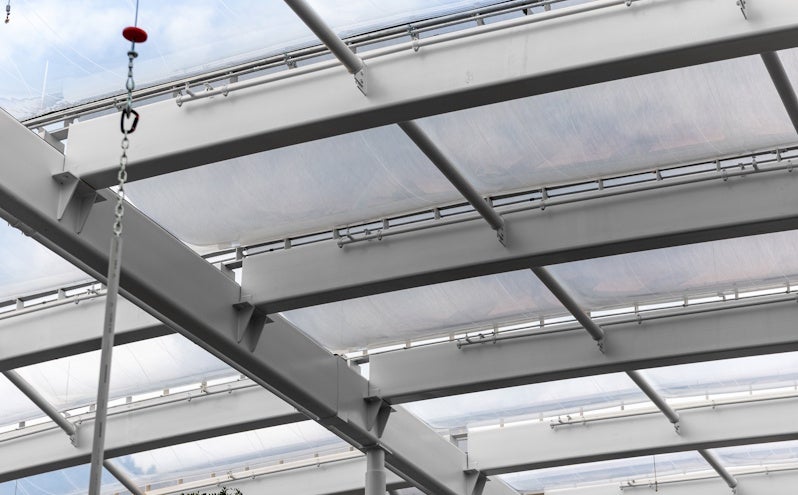
Hollow Structural Sections became the linchpin of the habitat design, replacing more expensive clear-span, round tube lenticular trusses with a series of robust HSS arch frames supporting an expansive ETFE roof. The decision to use HSS solved budgetary and functional demands, while facilitating aesthetic possibilities that set the barn apart from other enclosures. This pivotal choice was crucial to support the grand opening in June 2026. Because the ETFE roof could not be installed in cold or windy weather, it needed to be done by the fall of 2025 so the interior could be completed before the following summer. Keeping up with an aggressive steel fabrication and erection schedule throughout 2025, the project team accomplished the goal to keep construction on track.
Rectangular HSS delivered unmatched design elegance and construction efficiency, with 24×12 and 30×10 as the primary sizes in the structure. “With HSS, we could create those long, beautiful spans and graceful arches you see inside the barn, while minimizing the number of interior columns—features that make the space feel genuinely open and natural for the giraffes,” noted Julian Lineham, Founding Principal at Studio NYL.
The long, sweeping arches mimic the horizon lines and broad skies of the giraffes’ native habitat, immersing animals and visitors alike in an environment reminiscent of the wild. “This is now the largest ETFE-roofed animal care facility in the Western Hemisphere, and other zoos are planning to follow suit,” said Gregory Friesen, Owner at CSNA Architects Colorado Springs. “Sunlight pours in from every angle. For the guests and, more importantly, the giraffes, it doesn’t feel like a zoo—it feels like open country.”
Critical MEP materials were run across the top of the HSS to blend into the structure, preserving the interior’s uncluttered, natural effect.
Exceptional Safety and Animal Welfare
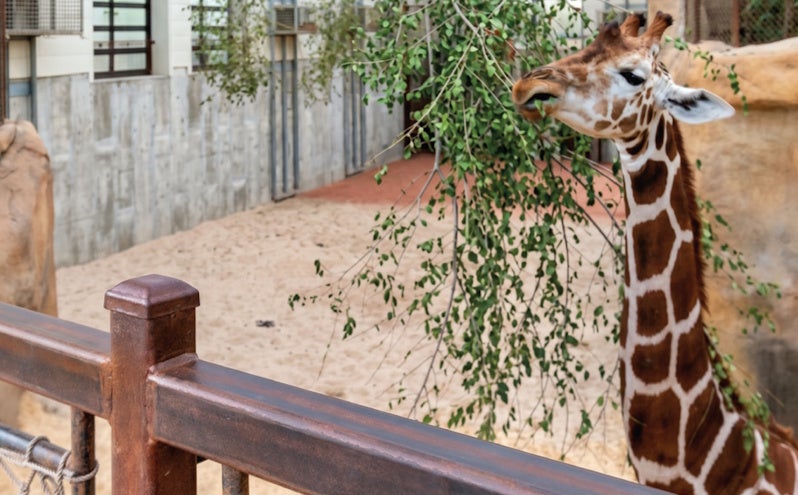
A signature benefit of HSS was that they provided animal-friendly surfaces. “We wanted a structure that was not just iconic, but one that truly promoted the well-being of the animals. HSS gave us both—elegance and peace of mind for animal safety,” said Friesen. Unlike some steel profiles that have sharp flanges or corners, HSS profiles present smooth, gentle curves. This design detail proved crucial: one of the top priorities of zoo leadership and the project team was to ensure that any structural steel used would not be able to scratch, cut or otherwise hurt the giraffes.
We wanted a structure that was not just iconic, but one that truly promoted the well-being of the animals. HSS gave us both—elegance and peace of mind for animal safety.
Beyond safety, the flat surfaces of HSS prevent the buildup of dust—a point mentioned repeatedly by the zoo’s CEO and animal care team. “Using rectangular HSS, alongside a programmable rain system inside the habitat, means less dust from the giraffes’ hooves and an easier environment to maintain—not just for the enjoyment of zoo patrons, but more importantly, for the giraffes’ health,” said Friesen.
Results: A Landmark Structure
- Natural, Wild-Like Habitat: The barn’s transparent, soaring roof and open spans truly evoke the African plains—creating not just a shelter, but a vibrant ecosystem. “The animals respond to the natural light, space and fresh air. It feels wild—not like an exhibit,” said Friesen.
- Unparalleled Animal Safety: The smooth, uninterrupted surfaces of HSS eliminate sharp edges, ensuring complete safety for the giraffes. “We turned out some really beautiful structural steel,” said Maryann Davis, Estimating Manager with Drake-Williams Steel. “One of the primary concerns was to use steel members that wouldn’t scratch the giraffes, which doesn’t come up in many project specifications.”
- Efficient, Clean, Timeless Design: Smooth, closed shapes and minimized dust accumulation highlight the barn’s functionality.
- Cost-Effectiveness: The innovative HSS approach brought the iconic vision within financial reach, saving on both material and erection costs.
- Rapid Construction: The constant HSS radii of the HSS arches allowed for efficient HSS production, fabrication and erection, an advantage as crews raced against mountain winter weather to seal in the habitat.
The Cheyenne Mountain Zoo’s Giraffe Barn is more than an engineering accomplishment—it’s a monument to what’s possible when design innovation, resident welfare and construction expertise come together. Leveraging jumbo section HSS members allowed the team to craft a landmark habitat: expansive, sunlit, safe and natural. Guided by the voices of architects, engineers, animal caregivers and steel fabricators, the barn demonstrates that with the right material and the right vision, we can bring a piece of the wild to the heart of Colorado—delighting visitors and enriching the lives of the animals who call it home.
Sean Boyd of Drake-Williams Steel added, “Working with Atlas Tube was a fantastic experience—they were attentive, responsive and genuinely invested in the success of this project. Their dedication helped us deliver an outstanding result for the zoo and its giraffes.”