
Jumbo™ HSS: Expanding Structural Design Possibilities for Large Loads, Long Spans, and Efficient Construction
Atlas Tube is the only manufacturer in North America producing Jumbo™ HSS, offering the largest HSS sizes available on the continent. Jumbo HSS gives engineers new options for heavily loaded columns, long-span structures, braced frames, and architecturally exposed steel. Larger sections can help reduce member counts, simplify fabrication, and support efficient structural designs for demanding applications.
Structural engineers across North America have continued expanding their use of Hollow Structural Sections (HSS) as projects grow more ambitious and stakeholders demand higher performance, improved aesthetics, and greater construction efficiency.
When Atlas Tube introduced Jumbo™ HSS to the North American market, it created new opportunities for structural engineers seeking alternatives to built-up box sections, larger wide-flange members, or multi-member solutions. Atlas Tube is the exclusive North American manufacturer and supplier of Jumbo HSS, producing the largest HSS available on the continent. Engineers can specify square HSS up to 22 inches, rectangular HSS up to 34 × 10 inches, and round HSS up to 28 inches OD, all with wall thicknesses up to 1 inch.
Manufactured at our state-of-the-art Jumbo Mill in Blytheville, Arkansas (a facility with a standalone Environmental Product Declaration) and backed by Atlas Tube’s extensive distribution network, Jumbo HSS gives project teams access to larger, high-capacity structural members with shorter lead times and greater availability than traditional custom-built alternatives. These sections help engineers pursue efficient solutions for long spans, high axial loads, large braced frames, and architecturally demanding projects.
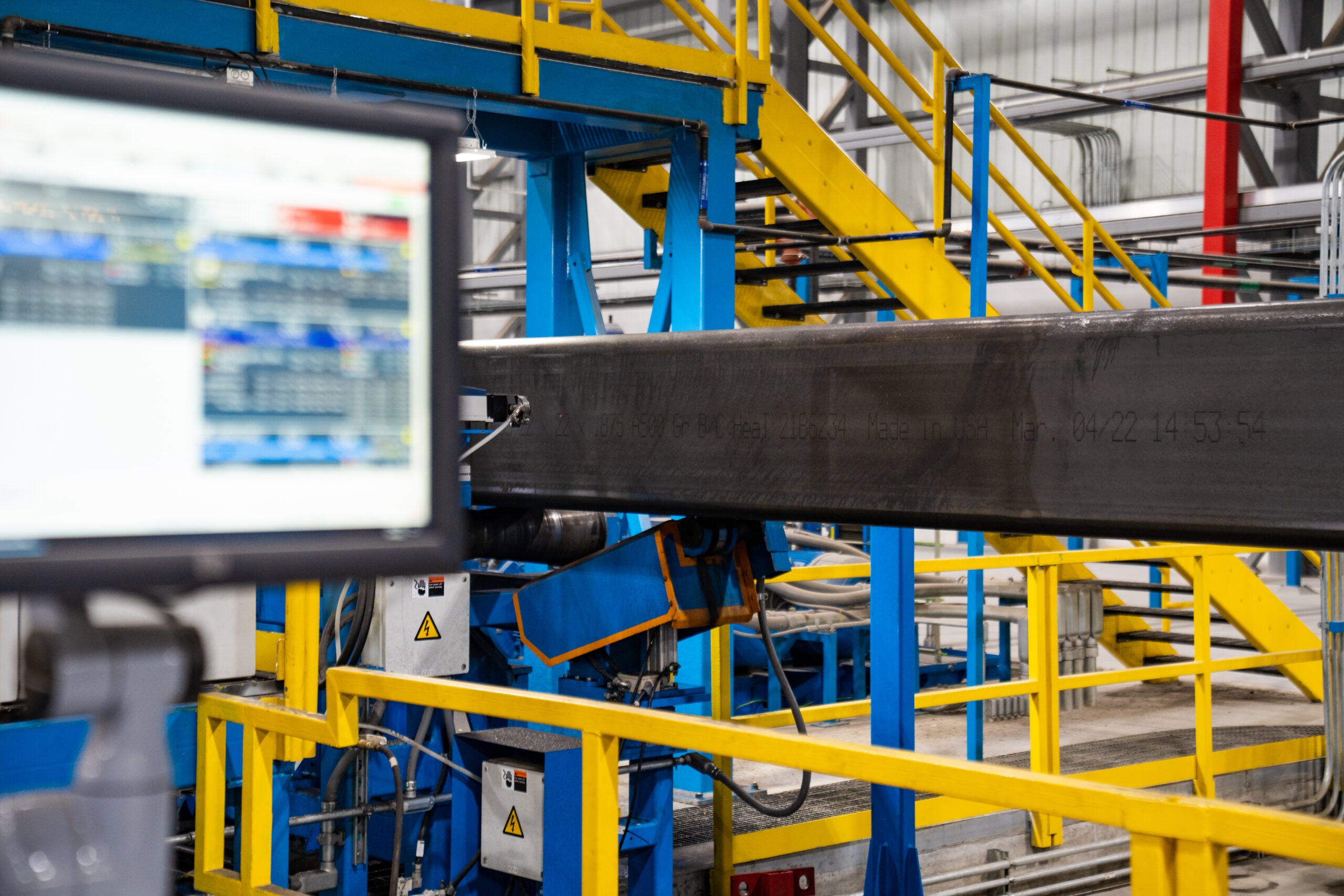
Atlas Tube Jumbo HSS is produced in a mill with a facility-specific EPD.
Why Engineers Are Turning to Larger HSS Sections
Many modern structures face increasing demands driven by taller buildings, larger open spaces, heavier loads, and tighter schedules. Engineers are often challenged to deliver these performance requirements while managing material quantities, fabrication complexity, and overall project coordination.
Jumbo HSS can help address these challenges by providing:
- High compression capacity for heavily loaded columns
- Favorable strength-to-weight characteristics
- Excellent torsional resistance
- Reduced visual mass compared with alternative framing systems
- A closed shape that performs well in architecturally exposed applications
- Opportunities to simplify framing layouts and connection geometry
Because HSS provides strength in multiple directions, engineers often find efficient solutions for structures experiencing combined loading conditions or requiring robust lateral-force-resisting systems.
Applications Where Jumbo HSS Delivers Value
Heavily Loaded Building Columns
Jumbo HSS is particularly well suited for gravity columns in commercial, institutional, industrial, and mixed-use structures.
The increased size range allows engineers to carry substantial axial loads while maintaining a relatively compact footprint. In occupied spaces, reducing column dimensions can create additional usable floor area and improve architectural flexibility. The smooth profile of HSS also helps integrate columns into architectural designs where appearance is an important consideration.
A notable example is the One Vanderbilt tower in New York City, where Jumbo HSS were used as part of the structural system supporting one of the tallest office buildings in Midtown Manhattan. The project demonstrated how Jumbo HSS can help engineers address substantial axial loads while maintaining efficient member sizes and supporting demanding architectural and constructability requirements.

Jumbo HSS provided stability, high bending capacity, and reinforced the architectural vision of One Vanderbilt in New York City. (Max Touhey)
Long-Span Structures
Large-span buildings such as convention centers, transportation facilities, manufacturing plants, and sports venues often require structural members capable of spanning significant distances while maintaining efficiency.
Using larger HSS may allow engineers to reduce the total number of framing members required on some projects. Outcomes vary based on loading, deflection limits, connection requirements, and fabrication considerations, but larger sections can create opportunities for more streamlined framing systems.
Braced Frames and Seismic Systems
Structural engineers continue to use HSS extensively in concentrically braced frame systems because closed shapes provide efficient structural behavior while accommodating significant compression and tension demands.
Depending on member geometry and project-specific seismic provisions, Jumbo HSS sections can offer engineers additional options when designing braces for larger structures or higher load requirements. Design teams should verify compliance with the applicable edition of AISC 341 and project-specific seismic criteria.
Industrial and Infrastructure Projects
Industrial facilities, energy projects, transportation structures, and mission-critical infrastructure frequently require members capable of resisting demanding load combinations and harsh service conditions.
The availability of larger HSS sizes provides opportunities to standardize member selection while maintaining robust structural performance throughout the facility.
Concrete-Filled HSS: Expanding Capacity Potential
One of the most valuable applications for Jumbo HSS is the use of concrete-filled tubes (CFTs).
When filled and designed as composite members, HSS columns can achieve increased axial load-carrying capacity as well as increasing lateral stiffness while maintaining a relatively compact footprint. Concrete-filled HSS may also offer additional benefits related to structural performance and fire endurance, depending on the design approach and governing building code requirements. Engineers should evaluate these benefits using applicable code provisions and project-specific criteria.
Constructability Benefits Beyond Structural Capacity
While structural performance often drives member selection, constructability remains a critical consideration for engineering teams.
Many projects experience schedule pressure resulting from labor constraints, fabrication demands, material lead times, and coordination among project stakeholders. In these situations, reducing fabrication complexity can be as valuable as optimizing structural efficiency.
Compared with built-up box sections, Jumbo HSS arrives as a single manufactured section rather than requiring fabrication from multiple plates. This can reduce shop labor, welding, inspection requirements, and material handling. In many applications, larger HSS sections can also help reduce the number of members required, supporting faster erection and more streamlined construction workflows. While benefits vary by project, engineers should evaluate fabrication and erection efficiencies alongside traditional structural performance metrics when comparing framing alternatives.
Addressing the HSS Connection Challenge
As member sizes increase, connection design becomes increasingly important.
To support engineers, detailers, and fabricators working with HSS, Atlas Tube offers the HSS Connections Hub™, a web-based platform containing over 75+ HSS connection calculators and 150+ fabrication-friendly typical details aligned with current AISC and CISC design standards. The platform includes tools for HSS-to-HSS, HSS-to-wide-flange, wide-flange-to-HSS, brace, truss, base plate, and moment connection applications. Atlas Tube also has a dedicated team of experienced structural engineers with decades of combined experience ready to assist with HSS connection design, the HSS Connections Hub, and HSS material specifications.
For engineering teams seeking efficient workflows, these resources can help streamline connection design coordination early in the project lifecycle.
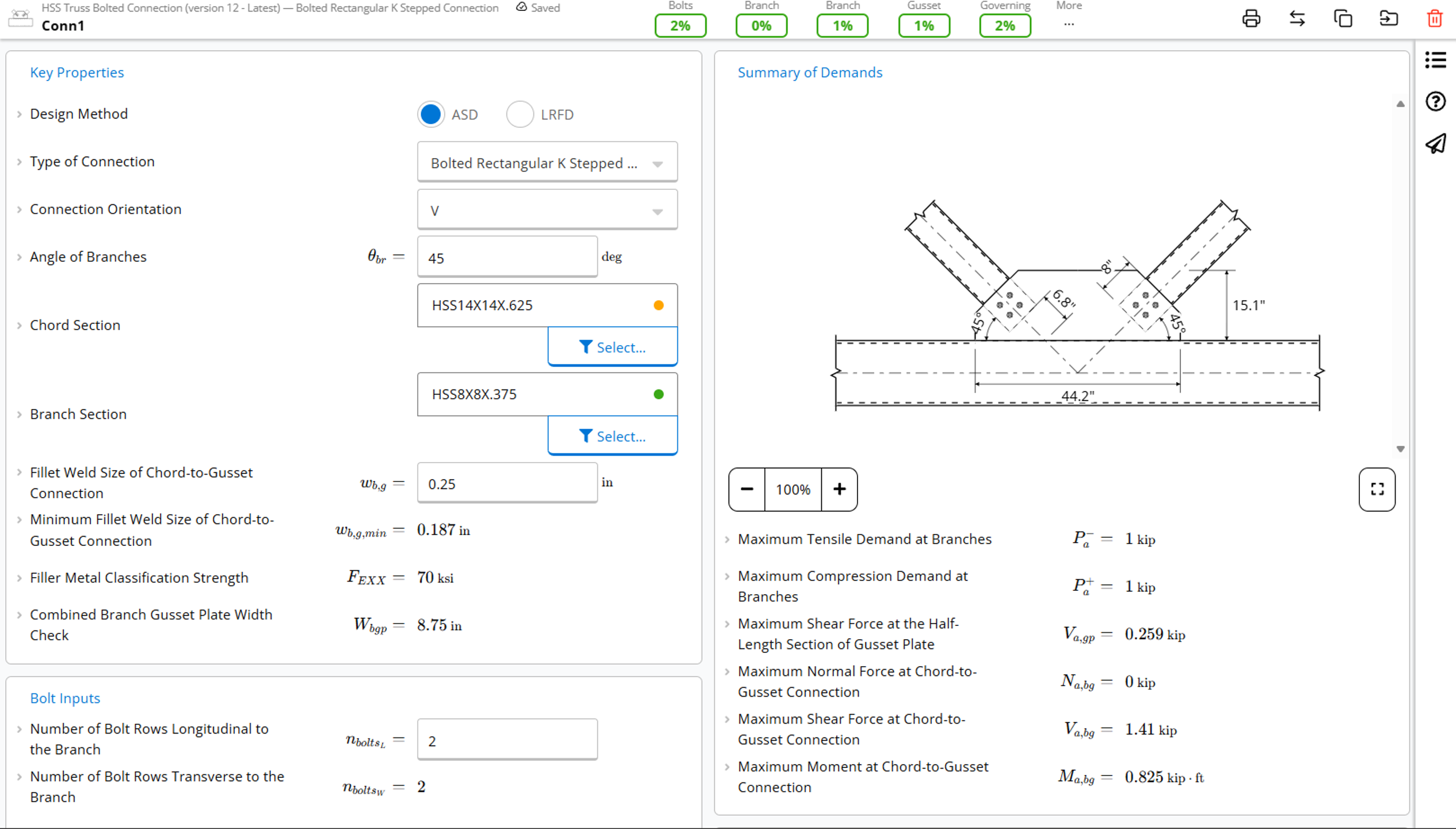
The HSS Connections Hub is a complimentary resource built by engineers, for engineers.
Evaluating HSS Against Alternative Framing Solutions
Cost discussions related to HSS are often more complex than simple material comparisons.
While HSS may have a higher cost per pound than some alternative steel shapes, project economics should be evaluated holistically. Factors such as structural efficiency, architectural requirements, connection design, fabrication effort, erection sequencing, coating requirements, foundation design, and occupied floor area can all influence overall project value. The most effective solution depends on loading conditions, geometry, construction methods, local market factors, and stakeholder priorities. Engineers should evaluate multiple framing alternatives before finalizing member selection.
Atlas Tube offers several online HSS design tools to help engineers determine the best steel section for their projects. Resources include the Axial Load Calculator, the HSS vs. Wide Flange Beam Comparison Tool, and the HSS vs. Wide Flange Column Comparison Tool.
Build Bigger, Wider, and Taller with Jumbo HSS
As structures continue to grow in complexity and performance expectations increase, structural engineers need access to a wider range of design tools and material solutions.
Jumbo HSS gives engineers additional flexibility for heavily loaded columns, long-span structures, seismic applications, architecturally exposed steel, and composite construction. With the largest HSS size range available in North America, combined with engineering resources, connection design support, and digital design tools, Atlas Tube helps project teams explore efficient solutions for today’s most demanding structures.
Ready to explore Jumbo HSS for your next project? Visit the Atlas Tube Jumbo HSS page to review available sizes, specifications, technical resources, and engineering support options.
Frequently Asked Questions
What is Jumbo HSS?
Jumbo HSS refers to large hollow structural sections used in applications requiring higher load capacity, longer spans, or larger structural members. Atlas Tube currently offers square HSS up to 22 inches, rectangular HSS up to 34×10 inches, and round HSS up to 28 inches OD.
What are the advantages of Jumbo HSS?
Potential advantages include high compression capacity, favorable strength-to-weight characteristics, efficient torsional performance, compact column footprints, architectural appeal, and opportunities to simplify framing systems. Benefits vary by project and should be evaluated through engineering analysis.
Can Jumbo HSS be used for seismic applications?
Yes. HSS is commonly used in braced frame systems and seismic applications. Engineers should verify compliance with applicable seismic design standards, including project-specific provisions and the governing edition of AISC 341.
Can Jumbo HSS be filled with concrete?
Yes. Jumbo HSS can be designed as concrete-filled tubes (CFTs), allowing composite behavior that can increase column capacity and provide additional design advantages depending on the application and governing code requirements.
Where can engineers find HSS connection design resources?
The Atlas Tube HSS Connections Hub™ provides calculators, connection design tools, typical details, and technical resources supporting both AISC and CISC design workflows.
Brad Fletcher, Senior Structural Engineer at Atlas Tube, holds the S.E. license—structural engineering’s most advanced credential. With 30+ years of practice, he has served as an HSS industry liaison since 2011.