
How to Use Tool:
- Select the wide flange (WF) section you’d like to replace with HSS from the drop-down menu
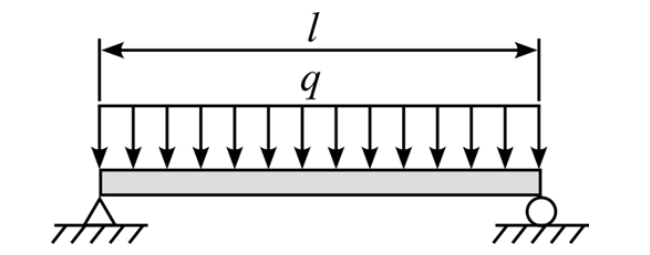
- Enter the span length in feet. This is the distance between support points of the beam
- Select the amount of bracing of the top flange. If the beam is continuously braced (i.e., supports a floor slab), then use 100% If the beam does not support any floor and has no members framing into it, use 0%. If you do not know how the beam is braced, then use 100% as this is the most typical situation for a building.
- 100% = top flange is braced over its entire length
- 50% = Top flange is braced at mid span
- 33% = top flange is braced at 1/3 points
- 25% = top flange is braced at 1/4 points
- 0% = top flange is not braced
- Select the yield strength of the steel. Typically, wide flange sections are produced to ASTM A992 with a yield strength of 50 ksi. Only use something other than 50 ksi if you know the steel has a different yield strength.
- Enter the factored uniformly distributed gravity load on the beam in pounds per ft. If you do not know the load, use 0. When 0 is entered for the load, the tool will only return HSS sections that match the wide flange sections flexural capacity. No sections optimized for the load will be returned.
- To calculate potential weight and dollar savings: (1) Select one HSS size that meets your requirements, and (2) Enter the # of WF beams to change. Results will be displayed dynamically. To calculate potential dollar savings simply enter the $ / lb. for WF and HSS section.